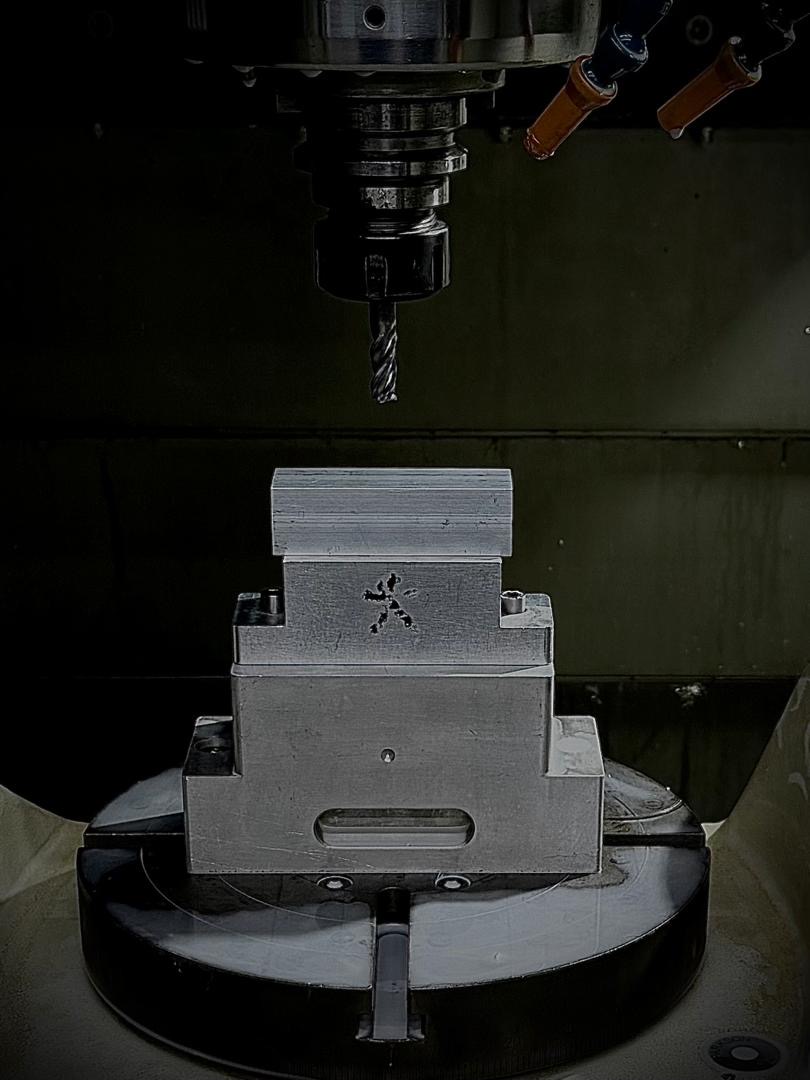
01
CNC MILLING
Accurate faces, pockets and holes on prismatic parts.
A rotating cutter removes material from a fixed workpiece. The standard process for housings, plates, brackets and fixtures that need flat, square and precisely positioned features.
TYPICAL PARTS
HOUSING · PLATES · BRACKETS · FIXTURES
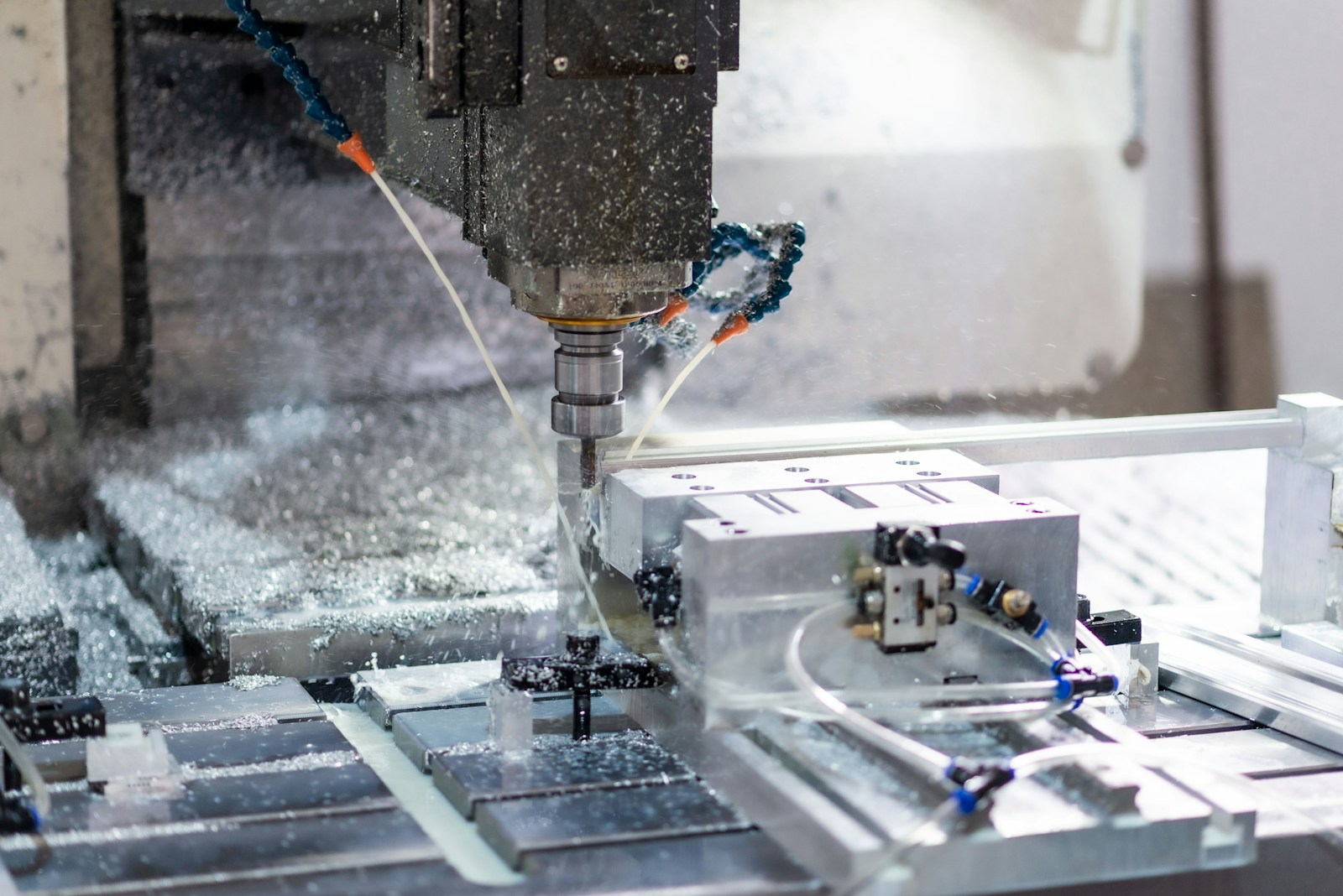
02
CNC TURNING
Round parts with consistent diameters, batch after batch.
The workpiece spins while a fixed tool cuts it. This gives good roundness and concentricity with short cycle times, so it suits single parts and repeat orders.
TYPICAL PARTS
SHAFTS · PINS · BUSHINGS · THREADED PARTS
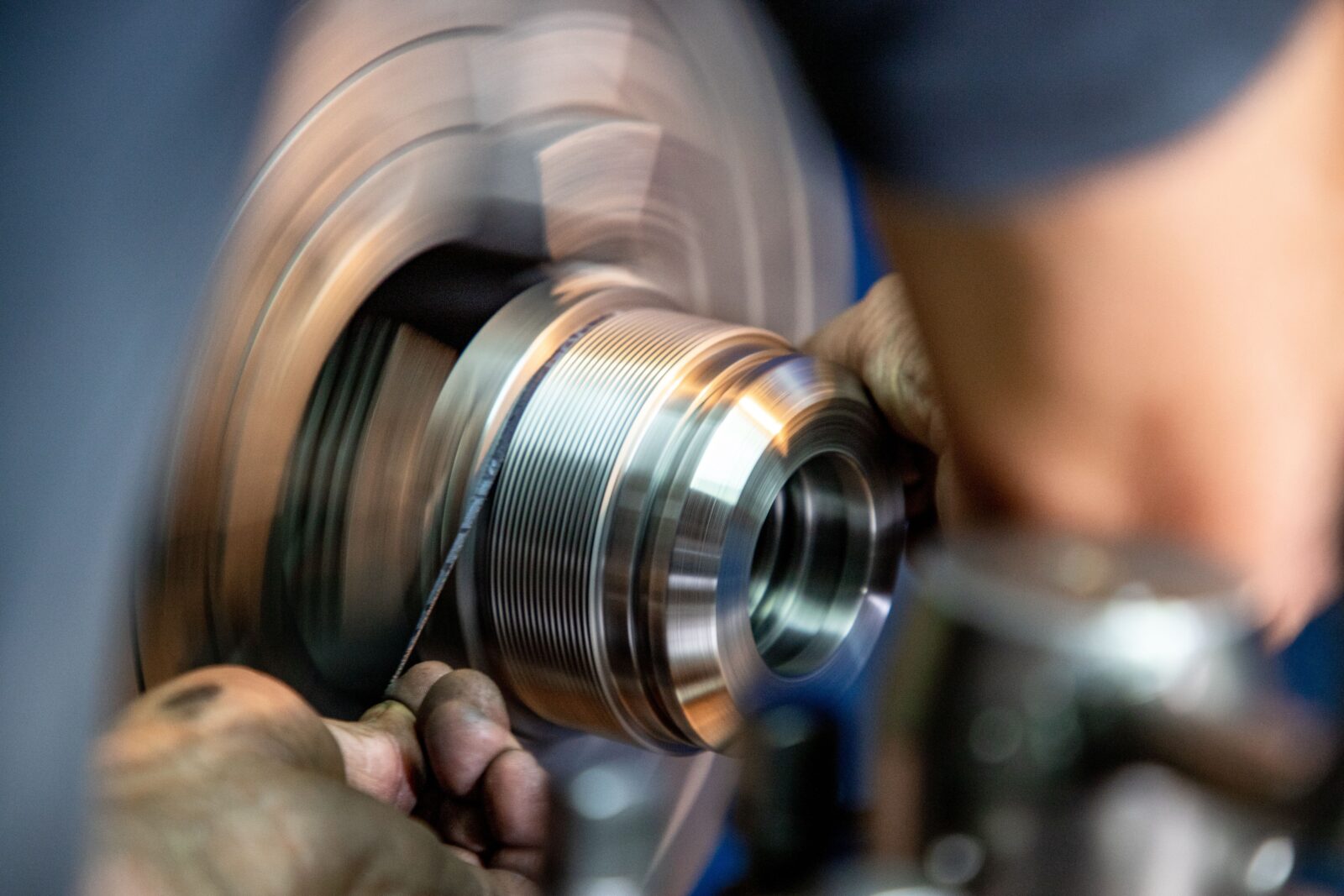
03
CNC HORIZONTAL MACHINING
Stable, efficient production of multi-face parts.
With the spindle mounted horizontally, chips fall away from the cut instead of collecting on the part. This protects surface finish and tool life, and lets several faces be machined in one set-up.
TYPICAL PARTS
BOX-TYPE PARTS · MULTI-FACE PARTS · REPEATED ORDERS
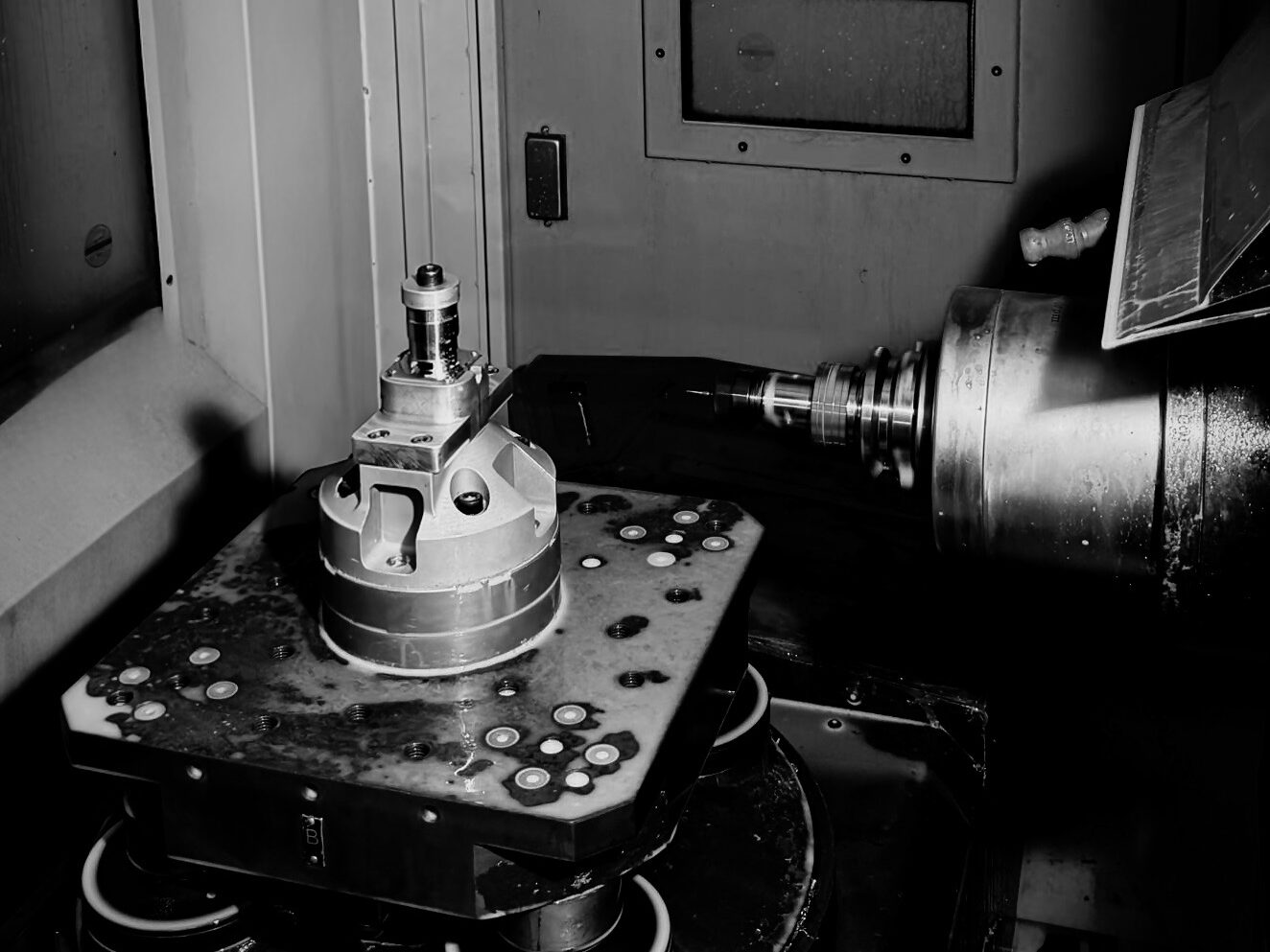
04
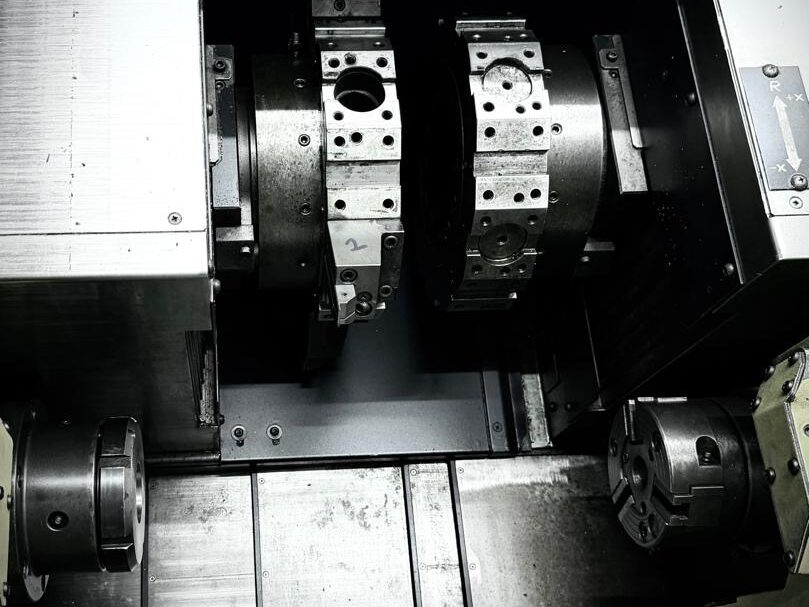
MULTI-TASKING MACHINING
Turn and mill in a single machine, in one set-up.
One machine combines turning and milling, often with a second spindle. The part is completed without moving between machines, so every feature is cut from the same datum for better concentricity and position accuracy.
TYPICAL PARTS
TURNED AND MILLED PARTS · COMPLEX SHAFTS · FINISHED-IN-ONE PARTS
05
CNC 5-AXIS MACHINING
Complex shapes finished in fewer set-ups.
The cutter and part move together on five axes, reaching angled faces, curved surfaces and undercuts in one set-up. Fewer set-ups mean better accuracy between features and shorter lead times.
TYPICAL PARTS
CONTOURED SURFACE · ANGLED HOLES · UNDERCUTS · COMPLEX HOUSINGS